
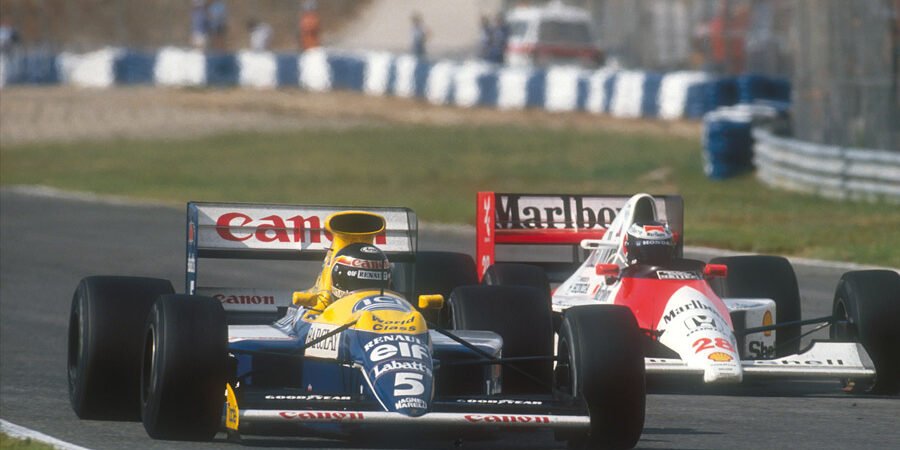
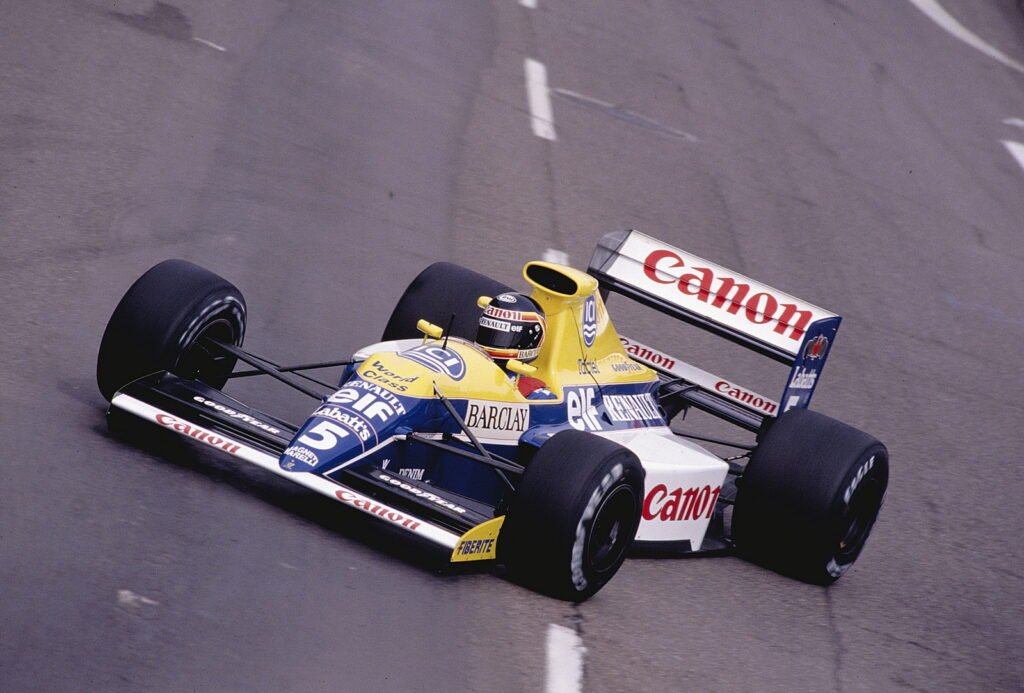
At the end of 1990, Nigel Mansell stepped into the Williams 1990 F1 car, the FW13B, for a test that reportedly left the team questioning how much performance it had missed throughout the season.
Mansell immediately found speed that Williams hadn’t consistently extracted from the car. Some historical accounts even claim that at Paul Ricard, he lapped roughly a second faster than the pole-position time he had set there earlier that year in a Ferrari.
Although comparisons between private testing and Grand Prix qualifying require caution, the implication was fascinating: Williams might have spent an entire season underestimating its own car.
The Williams FW13B Was Faster Than Its Results Suggested
Williams entered 1990 still rebuilding after losing Honda’s engine partnership to McLaren. Following a winless 1988 season with Judd engines, the arrival of Renault’s V10 in 1989 had helped restore the team’s competitiveness.
The partnership quickly delivered results. Thierry Boutsen won in Canada and Australia in 1989, helping Williams finish second in the Constructors’ Championship. The Williams 1990 F1 car was an evolution of the FW13, now known as the FW13B and powered by Renault’s improved RS2 V10.
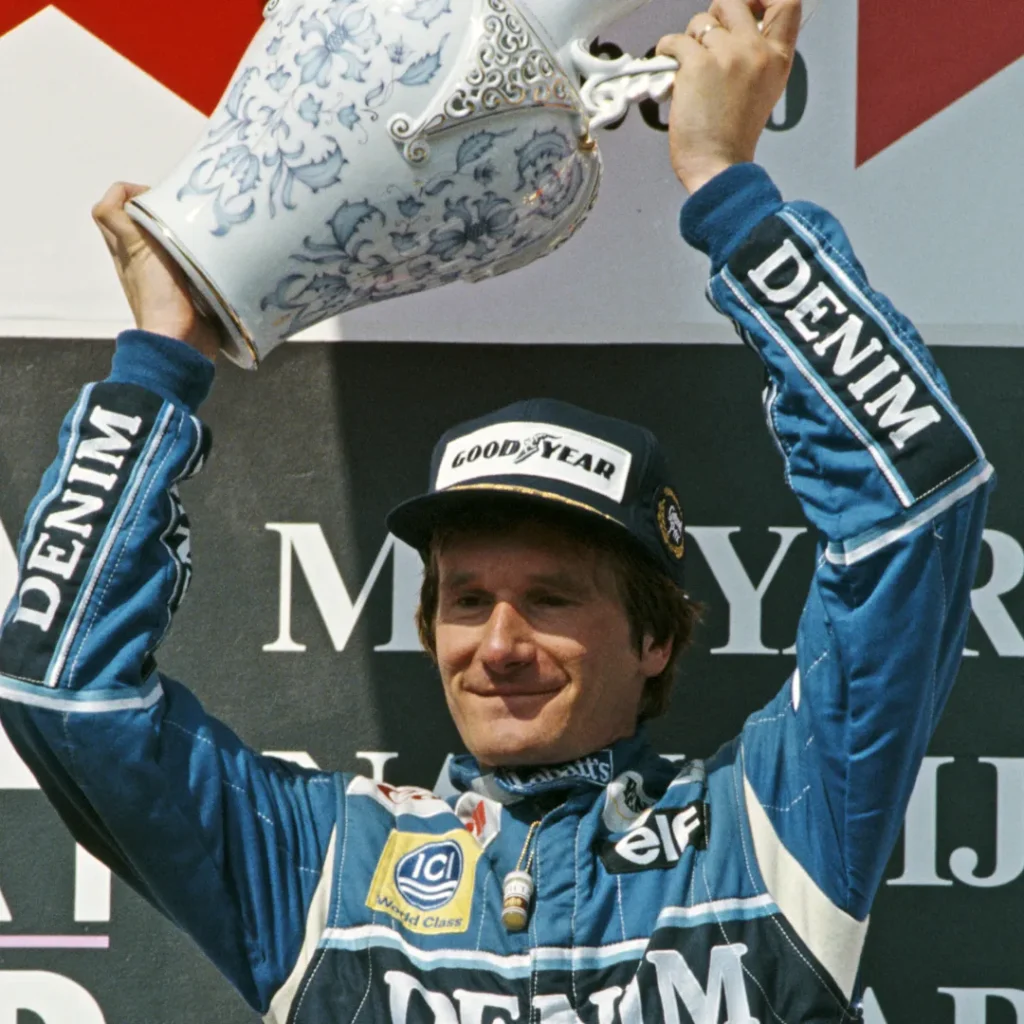
There were obvious signs of potential. Riccardo Patrese won at Imola, while Boutsen claimed pole position and victory in Hungary after resisting intense pressure from Ayrton Senna. Across the season, the FW13B recorded two victories, one pole position and five fastest laps.
Yet Williams finished only fourth in the Constructors’ Championship, behind McLaren, Ferrari and Benetton. The car was clearly capable of winning races, but its results suggested something was holding it back.
Reliability Wasn’t Williams’ Only Problem
Mechanical issues played a significant role. The FW13B could be difficult to set up, and recurring engine and gearbox problems cost valuable opportunities. At Imola, Boutsen was leading when a gear-selection failure ended his race, leaving teammate Patrese to take victory.
Driver mistakes also contributed. During the Brazilian Grand Prix, Boutsen locked up entering the pits, struck a mechanic and then hit a wheel prepared for his stop. The resulting damage compromised another race in which Williams had demonstrated competitive pace.
But there was a more uncomfortable question: were Williams’ drivers consistently extracting the maximum performance from the car?
Boutsen and Patrese were experienced Grand Prix winners, but neither was generally considered among Formula 1’s elite alongside Senna, Alain Prost and Nigel Mansell. Williams was already preparing to bring one of those drivers back.
Nigel Mansell Returned — And Everything Changed
Mansell had previously won 13 Grands Prix for Williams between 1985 and 1988 before moving to Ferrari. By 1990, however, his relationship with the Italian team had deteriorated, particularly following Prost’s arrival.
Frustrated by internal tensions, Mansell announced his intention to retire from Formula 1. Frank Williams eventually persuaded him to reconsider, securing his return for 1991 alongside Patrese.
Before the new season began, Williams had an opportunity to evaluate its outgoing FW13B with a different driver behind the wheel.
The results were revealing.
The FW13B Test That Surprised Williams
Historical accounts of Mansell’s early tests describe an immediate improvement in performance, partly driven by a different approach to the car’s setup.
Boutsen reportedly preferred an extremely stiff front suspension. Mansell requested a softer configuration and more aerodynamic wing, allowing him to attack corners differently and exploit the Renault-powered car’s potential.
Then came the lap times. During testing at circuits including Estoril and Paul Ricard, Mansell reportedly achieved performances that surprised the team.
One frequently repeated claim suggests that at Paul Ricard, Mansell was approximately one second faster than the qualifying lap he had set in his Ferrari at the 1990 French Grand Prix. Different track conditions, fuel loads and testing configurations make that comparison difficult to verify precisely.
Nevertheless, the reported improvement raised an intriguing possibility: Williams had spent much of 1990 trying to develop a car whose existing performance hadn’t been fully exploited.
The Clues Had Already Been There
The 1990 Portuguese Grand Prix at Estoril offered another example of the Williams 1990 F1 car’s unusual performance profile.
Mansell qualified his Ferrari on pole with a 1:13.557, while Patrese’s Williams managed fifth with a 1:14.723. Boutsen was seventh, more than a second behind Mansell.
But during the race, Patrese recorded the fastest lap with a 1:18.306, demonstrating that the Williams possessed genuine speed even when its qualifying results suggested otherwise.
The FW13B wasn’t consistently converting that potential into victories or championship points. Mansell’s subsequent testing only strengthened the impression that more performance had been available.
Adrian Newey and the Beginning of Williams’ Dominance
Mansell’s return wasn’t the only major change happening at Williams. In 1990, the team had also recruited aerodynamic designer Adrian Newey, who joined forces with technical director Patrick Head.
The FW13B wasn’t designed by Newey, but Williams’ experience with the car, Mansell’s feedback and the team’s evolving engineering philosophy helped shape its next generation.
The FW14 arrived in 1991 and immediately established Williams as a serious championship contender. Mansell won five races, Patrese added two more, and the team challenged McLaren throughout the season.
Reliability problems prevented Williams from taking either championship, but the following year brought a remarkable transformation.
The FW14B, equipped with sophisticated active suspension, dominated the 1992 season. Mansell won nine of 16 races, secured 14 pole positions and clinched the Drivers’ Championship with five races remaining. Williams comfortably won the Constructors’ title.
Just two years after finishing fourth, Williams had become Formula 1’s benchmark.
Did Williams Waste the 1990 Season?
It’s impossible to know how many additional victories Mansell might have achieved in the FW13B during 1990. McLaren, Ferrari and Benetton were formidable opponents, and Williams’ reliability problems couldn’t be solved by driving talent alone.
But the story of Mansell testing the Williams 1990 F1 car illustrates something fundamental about Formula 1: a car’s true potential isn’t always reflected in its championship position.
The FW13B had already won races, taken pole position and recorded multiple fastest laps. What Williams reportedly discovered when Mansell tested it was that there might have been considerably more performance available.
The engine hadn’t suddenly changed. The car hadn’t been completely redesigned.
A different driver, with a different approach to setup, had simply revealed another side of it.
Enjoyed this story? Discover more fascinating moments, untold stories, and surprising facts from the world of motorsport in our Paddock Tales section.