
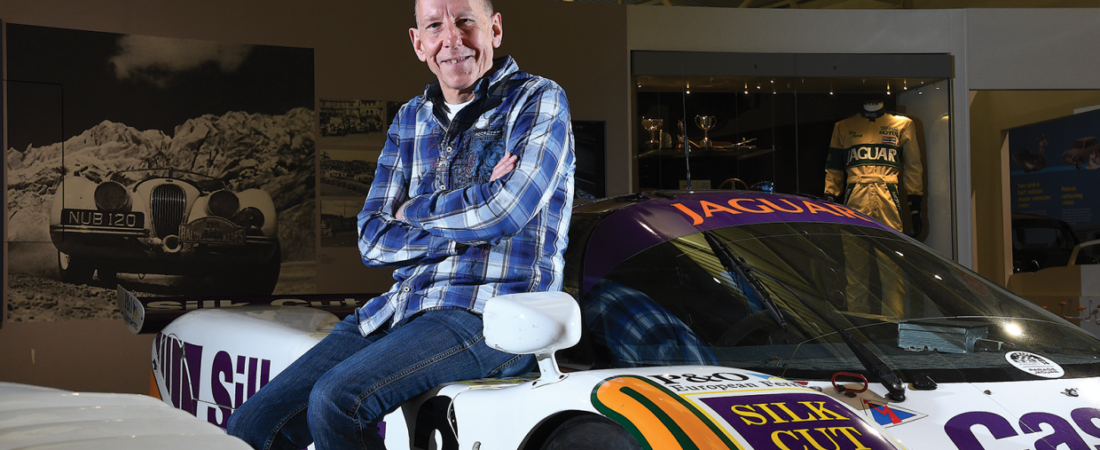
Andy Wallace was traveling at roughly 310 km/h — 193 mph — through Turn 1 at Eastern Creek when he suddenly felt a violent crack inside his body. He hadn’t crashed or hit another car. The Toyota TS010 was still on the track, running exactly as intended. Yet Wallace had just broken two ribs.
Even more remarkably, when Toyota put another driver in the same car, essentially the same thing happened again.
It sounds like one of those exaggerated stories from racing’s dangerous past, but it really happened. The bizarre incident occurred during an extraordinary nine-day Toyota endurance test in Australia in February 1992, as the Japanese manufacturer prepared one of the fastest Group C prototypes ever built.
According to Wallace, the reaction from Toyota’s engineers was unforgettable:
“The car is stronger than the driver.”
The Toyota TS010 Was Basically an F1 Car With a Roof
To understand how a race car could injure its drivers without crashing, you first have to understand just how extreme the Toyota TS010 was. By the beginning of the 1990s, Group C had changed dramatically, with new World Sportscar Championship regulations pushing manufacturers toward naturally aspirated 3.5-liter engines similar to those used in Formula 1.
Toyota responded by developing the TS010 around its new RV10 3.5-liter naturally aspirated V10. The numbers were remarkable: approximately 700 horsepower in sprint configuration, with around 600 hp in Le Mans trim.
The car featured a carbon-fiber monocoque, a six-speed transmission and sophisticated aerodynamics designed to generate enormous downforce. Its official maximum speed at Le Mans was approximately 215 mph (346 km/h), making it one of the most formidable sports prototypes of its generation.
Developed with the help of legendary British engineer Tony Southgate, whose résumé already included Jaguar’s successful Group C program, the TS010 was officially announced in October 1991. Toyota entered the car in the final round of that year’s World Sportscar Championship at Autopolis, where Andy Wallace and Geoff Lees finished sixth on its competition debut.
Wallace was hardly an inexperienced driver overwhelmed by a powerful prototype. He had already won the 1988 24 Hours of Le Mans with Jaguar, on his very first appearance in the race.
Years later, he would describe the TS010 as one of the best racing cars he had ever driven. But before he could fully appreciate its extraordinary performance, the Toyota would put his body through something he had never experienced before.
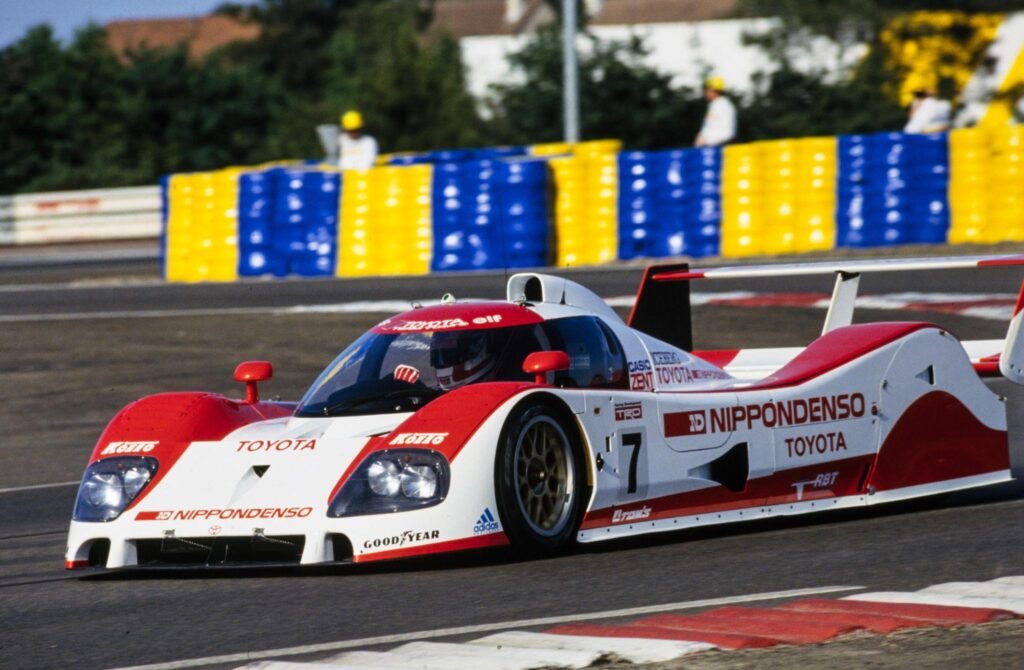
Toyota TS010: Nine Days of Relentless Testing in Australia
In February 1992, Toyota traveled to Eastern Creek Raceway, now known as Sydney Motorsport Park, for an extraordinary endurance test. According to Wallace’s later account, the team spent nine consecutive days running its cars, with testing beginning at 8 a.m. and continuing until 6 p.m. each day. Local noise restrictions prevented night running.
Toyota had two different objectives. One car focused on performance and development, while the other was subjected to a punishing endurance simulation. Wallace was assigned to the endurance car, with drivers alternating through approximately two-hour sessions as the team accumulated mileage.
Then came the final day: February 29, 1992. Eastern Creek’s first corner was extraordinarily fast in the TS010, and Wallace described entering the left-hander at approximately 310 km/h, completely flat on the throttle.
There was also a significant bump in the middle of the corner. With enormous aerodynamic downforce pushing the Toyota into the pavement and the suspension transmitting the forces through the chassis, the driver’s body was absorbing tremendous punishment.
After almost an hour behind the wheel, Wallace attacked Turn 1 again. As the car passed over the bump at full speed, he suddenly felt a crack inside his body.
Two ribs had broken. Simply from driving the car.
Wallace Tried to Keep Driving With Two Broken Ribs
What happened next says almost as much about racing in the early 1990s as the injury itself. Wallace didn’t immediately tell the team. Toyota had been running its endurance program for days, and he knew that stopping would disrupt the test.
When he returned to the pits for fuel, Wallace tried repositioning himself inside the cockpit so the seat and belts wouldn’t press as painfully against his injured ribs. Then he went back out, attempting another hour-long run despite having two broken ribs.
Eventually, the pain became impossible to ignore. Wallace returned to the pits and told the team he couldn’t continue. Toyota replaced him with Hitoshi Ogawa, who climbed into the same TS010 to continue the endurance program.
What happened next was almost unbelievable. Ogawa drove through essentially the same endurance cycle, and near the end of his stint, after approximately the same amount of running, he experienced a similar injury. His ribs had been hurt too.
Two drivers had now suffered rib injuries in the same Toyota TS010, during the same test, without either of them crashing. The car had endured the punishment, but the drivers’ bodies hadn’t.
Wallace later recalled that the Japanese engineers were delighted by what they believed the incident demonstrated about their machine: the car was stronger than its drivers.
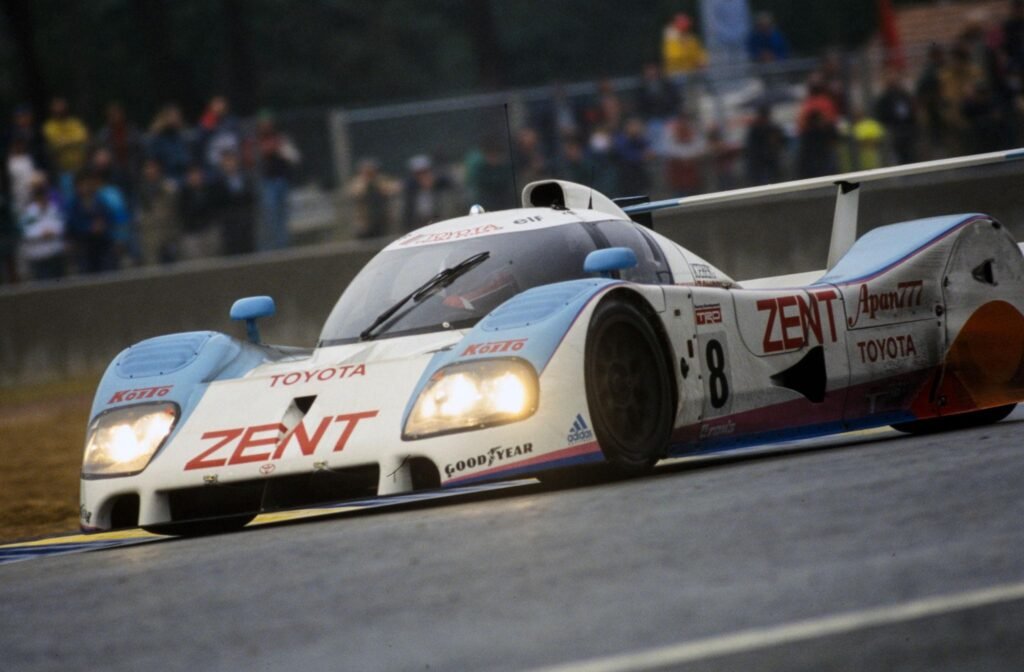
Why Could the Toyota TS010 Break a Driver’s Ribs?
The explanation wasn’t simply horsepower. The TS010’s extraordinary aerodynamic downforce, combined with Eastern Creek’s ultra-fast first corner and a bump in the racing surface, created enormous loads. At high speed, aerodynamic devices force a race car harder against the pavement, allowing drivers to corner at speeds that would otherwise be impossible.
But those forces don’t disappear. They pass through the tires, suspension, chassis, seat and ultimately the driver’s body. In the Toyota TS010, the combination of extreme cornering speeds and the bump at Eastern Creek subjected Wallace to punishing physical forces.
The Automobile Club de l’Ouest, organizer of the 24 Hours of Le Mans, has specifically highlighted the story when describing the TS010, noting that its aerodynamic downforce was so extreme that Wallace broke two ribs while negotiating the Eastern Creek corner at more than 300 km/h.
The car weighed roughly 750 kilograms while producing around 700 hp in its highest-power specification. In some circumstances, the new generation of 3.5-liter sports prototypes was delivering performance comparable to contemporary Formula 1 machinery. Toyota had created something brutally fast.
Three Weeks Later, Wallace Won Sebring With Broken Ribs
The craziest part of the story may actually be what Wallace did afterward. He had broken his ribs on February 29, 1992, and the 12 Hours of Sebring was scheduled for March 21, just three weeks later. Wallace knew that if his American team discovered the extent of his injuries, there was a good chance another driver would replace him. So he kept quiet.
That decision was particularly remarkable considering the circuit involved. Sebring was notorious for its violently bumpy surface, hardly an ideal place to race with broken ribs. Nevertheless, Wallace traveled to Florida and climbed into another Toyota-powered prototype, the Eagle MkIII, fielded by Dan Gurney’s All American Racers.
He shared the car with Juan Manuel Fangio II, taking on one of America’s most demanding endurance races while still recovering from his injuries.
They won.
Just three weeks after breaking two ribs during a high-speed test in Australia, Wallace had conquered Sebring. And the injury hadn’t come from crashing a race car, but simply from driving one through a corner at extraordinary speed.
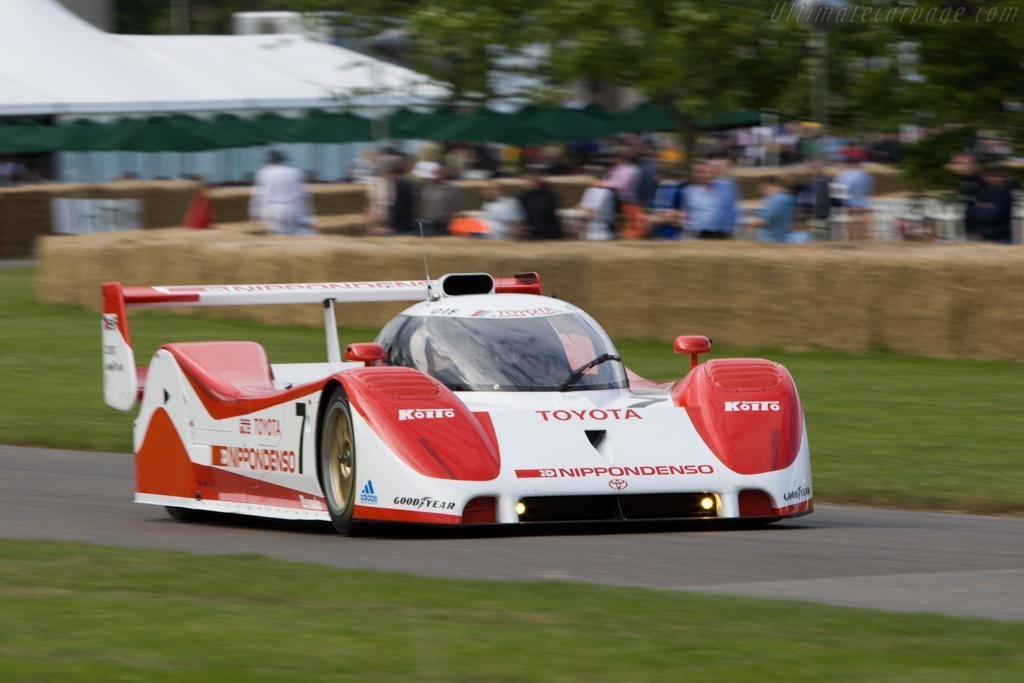
The TS010 Almost Gave Toyota Its First Le Mans Victory
The extraordinary Australian test wasn’t meaningless punishment. Toyota was preparing for the biggest endurance race in the world, and the TS010 came remarkably close to delivering a historic victory.
At the 1992 24 Hours of Le Mans, the Toyota driven by Masanori Sekiya, Pierre-Henri Raphanel and Kenny Acheson finished second overall, six laps behind the winning Peugeot 905 of Derek Warwick, Yannick Dalmas and Mark Blundell. Another TS010, shared by Jan Lammers, Teo Fabi and Andy Wallace, finished eighth.
Toyota’s official history notes that the TS010 also set the fastest race lap at Le Mans in both 1992 and 1993, demonstrating the extraordinary performance the company had extracted from its prototype. Although the car never won Le Mans, it had already secured an important place in Toyota’s racing history.
There was also a tragic footnote to the Eastern Creek story. Hitoshi Ogawa, the second driver injured during the Australian test, went on to win the opening round of the 1992 World Sportscar Championship at Monza alongside Geoff Lees in a TS010. Less than a month later, on May 24, 1992, Ogawa was killed in an accident during a Japanese Formula 3000 race at Suzuka.
Ogawa had been scheduled to race for Toyota at Le Mans that year. His death was unrelated to the TS010 or the broken-rib incident, but it gives the Australian testing story a poignant place in what became his final racing season.
A Race Car That Was Literally Stronger Than Its Drivers
he Toyota TS010 emerged from a remarkable era in motorsport, when manufacturers were investing enormous resources in Group C racing while regulations pushed sports prototypes toward Formula 1-style technology. Toyota created a carbon-fiber machine with a screaming 3.5-liter V10, around 700 horsepower and enough aerodynamic performance to attack a corner at 310 km/h without lifting off the throttle.
During nine relentless days of testing in Australia, Toyota discovered something its engineers probably hadn’t included in their calculations. The car could withstand extraordinary punishment, but the human body had its limits.
More than three decades later, the story of Andy Wallace breaking two ribs in the Toyota TS010 without crashing remains one of the most extraordinary examples of just how extreme Group C racing had become. The machine had survived the test. Its drivers hadn’t.
Love extraordinary motorsport stories? Discover how Al Unser won the 1987 Indy 500 in a car retrieved from a hotel lobby.
.