
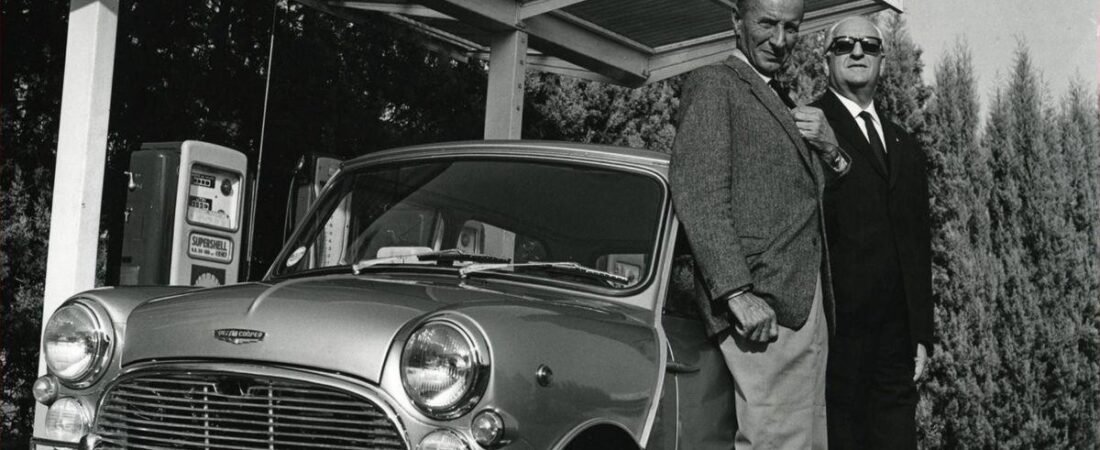
Enzo Ferrari preferred Peugeots over his own sports cars, even though he could have driven virtually any Ferrari he wanted, he often chose something remarkably ordinary for his daily transportation: a Peugeot sedan. And when winter brought snow to the roads around Modena, he sometimes preferred an even more unexpected alternative — a tiny, front-wheel-drive Mini Cooper.
For someone whose name became synonymous with powerful V12 engines, racing victories and exotic Italian sports cars, those choices seem almost impossible to believe. Yet the personal garage of Il Commendatore tells a different story. Away from the racetrack, Ferrari valued comfort, reliability and clever engineering, even when they came from manufacturers that had little in common with his own company.
His preferences weren’t simply rumors passed around by automotive enthusiasts. They were documented by people who knew him personally, including his longtime chauffeur Dino Tagliazucchi, whose recollections offer a fascinating glimpse into the everyday driving habits of one of motorsport’s most influential figures.
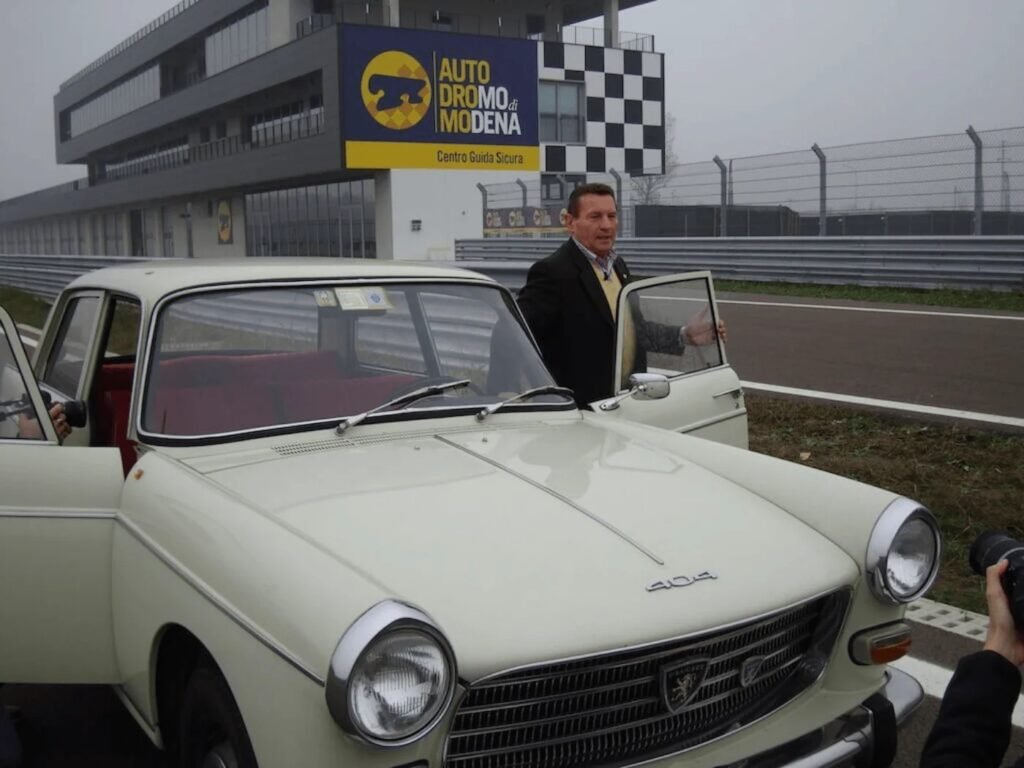
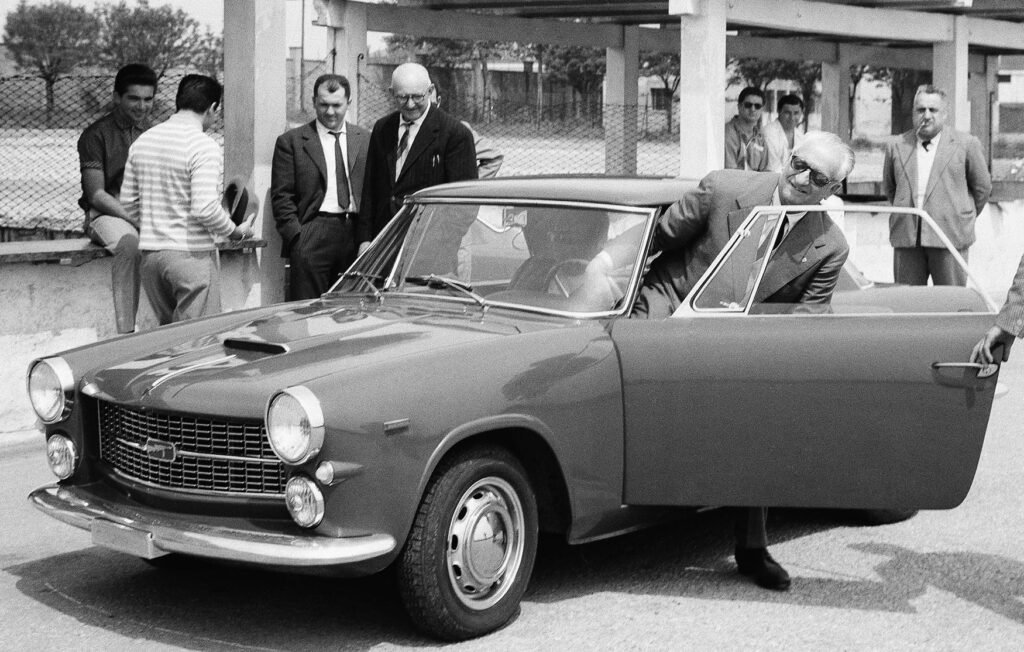
Enzo Ferrari’s Peugeot 404 Was His Real Daily Driver
One of the most detailed accounts of Enzo Ferrari’s personal cars comes from Dino Tagliazucchi, who worked closely with Ferrari and eventually became his personal driver. Tagliazucchi recalled seeing Ferrari behind the wheel of a Peugeot 404 sedan as early as 1966, and it wasn’t just an ordinary company vehicle. The car had been configured specifically to suit Ferrari’s preferences.
Finished in metallic gray with beige leather upholstery, the Peugeot 404 featured a radio, a replacement Nardi steering wheel and fog lights sourced from a Lancia Flaminia. Although these modifications were relatively modest, they showed that Ferrari had taken a personal interest in making the French sedan his own.
More importantly, he actually drove it. According to Tagliazucchi, the Peugeot was regularly used for journeys of approximately 200 to 300 kilometers, including trips to Monza. Ferrari’s racing operation even used a Peugeot 404 wagon as a support vehicle, suggesting that the French manufacturer’s presence extended beyond Enzo’s private garage.
The connection wasn’t entirely surprising. Pininfarina, the legendary Italian design house responsible for some of Ferrari’s most celebrated road cars, also maintained a longstanding relationship with Peugeot. The Peugeot 404 itself was designed by Pininfarina, creating an unusual connection between the practical French sedan and the exotic machines being produced in Maranello.
Around 1969, Ferrari replaced his 404 with a dark metallic blue Peugeot 504 sedan featuring a beige interior. Unlike its predecessor, the newer car was reportedly kept largely in standard specification. Despite having a personal chauffeur, Ferrari still enjoyed driving himself. Tagliazucchi remembered sitting in the passenger seat while Enzo drove, sometimes with guests or a bodyguard occupying the rear seats.
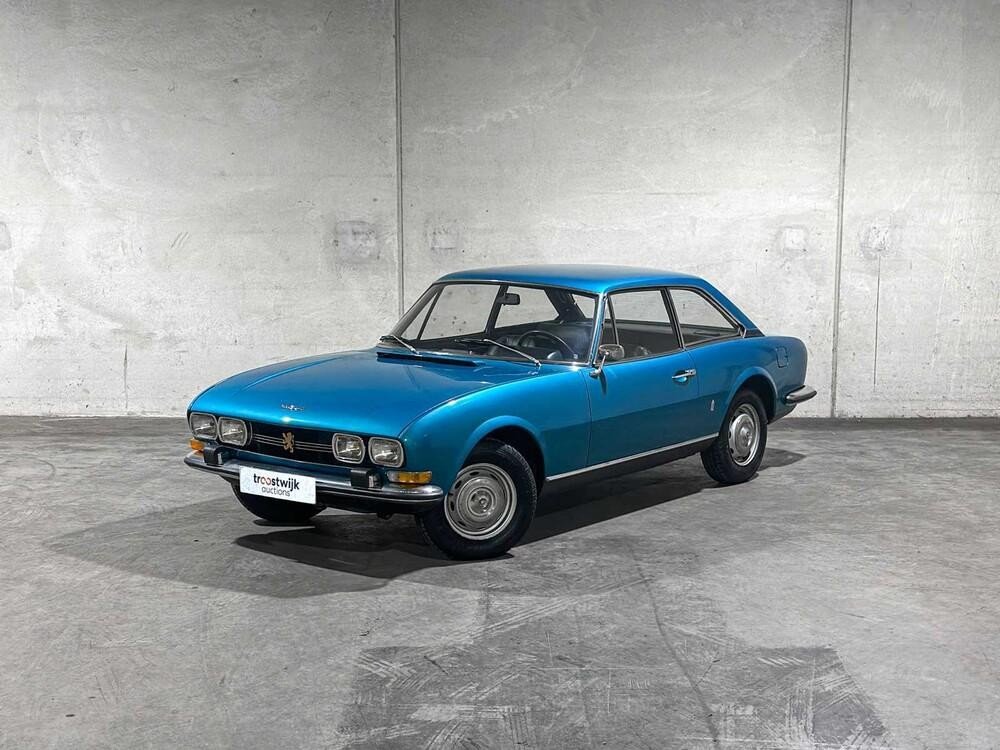
The relationship with Peugeot continued into the early 1970s, when Ferrari began using a first-generation 504 Coupé finished in blue with matching blue velour upholstery. Tagliazucchi described the car as comfortable and reliable, qualities that apparently mattered more to Ferrari in everyday driving than outright performance. The choice also maintained the Pininfarina connection, since the elegant 504 Coupé was another product of the Italian design house.
By approximately 1973, Ferrari’s preference for Peugeot began to give way to vehicles from the Fiat group. Fiat had acquired a 50 percent stake in Ferrari in 1969, and the growing business relationship made the use of Fiat-group cars a more natural choice.
That didn’t mean Enzo had completely abandoned his own creations. Tagliazucchi specifically recalled a Ferrari 365 GT in his possession, although it was used primarily for representative or promotional purposes rather than routine transportation.
The irony was unmistakable: while wealthy enthusiasts around the world dreamed of owning a Ferrari, the man who created them frequently preferred the comfort of a French family car.
Why Enzo Ferrari Loved the Tiny Mini Cooper
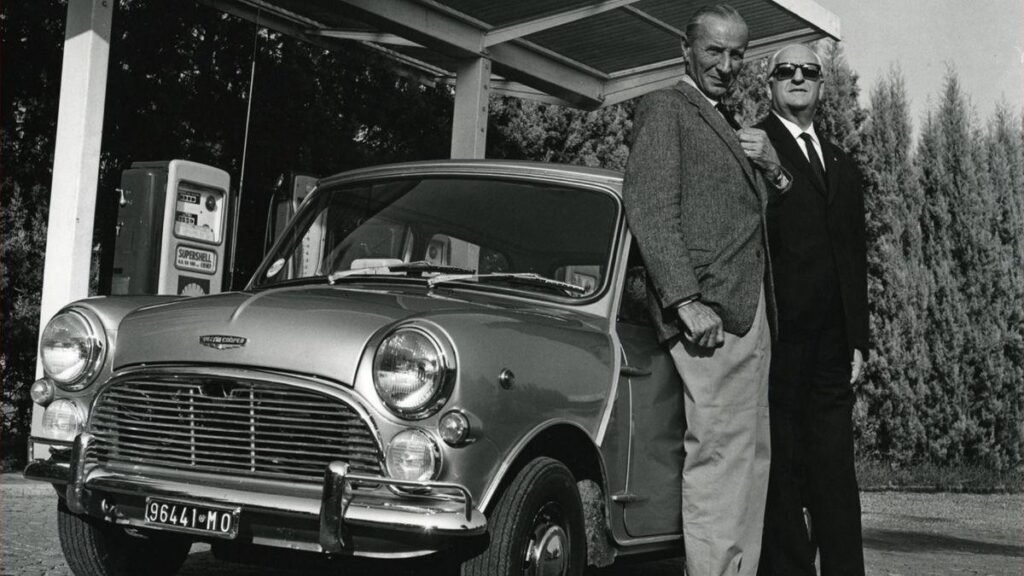
If Ferrari’s affection for Peugeot seemed surprising, his fascination with the original Mini was arguably even more remarkable. The tiny British car represented almost the complete opposite of the engineering philosophy associated with Maranello, yet Enzo developed a genuine appreciation for its unconventional design.
Created by British engineer Sir Alec Issigonis, the original Mini combined a transverse-mounted engine with front-wheel drive, allowing an unusually spacious passenger compartment within an exceptionally compact body. While Ferrari’s road cars emphasized powerful engines, dramatic proportions and high-speed performance, the Mini demonstrated how intelligent packaging could make a small, affordable vehicle extraordinarily practical.
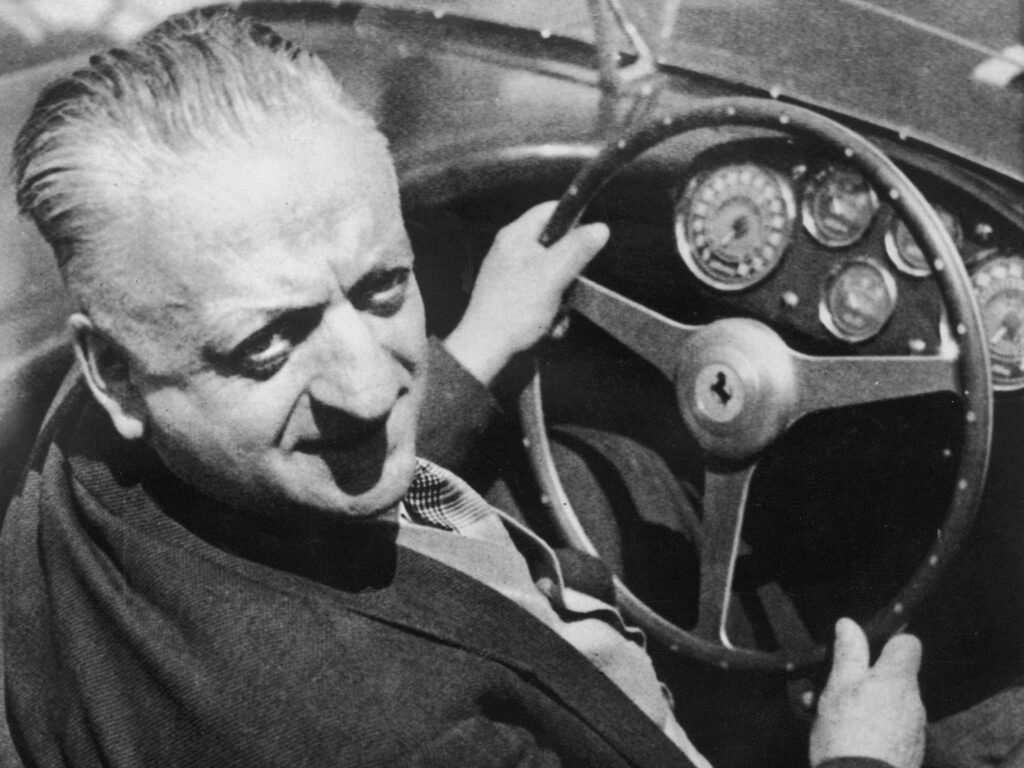
That engineering ingenuity fascinated Ferrari. Standing approximately 1.87 meters tall, he was hardly the obvious customer for such a small car, yet the Mini’s efficient interior design allowed him to fit comfortably behind the wheel. Its front-wheel-drive layout also provided an advantage on the snowy roads of northern Italy, where traction could be more valuable than horsepower.
According to Tagliazucchi, Ferrari particularly enjoyed using the Mini Cooper during winter, appreciating its predictable behavior in difficult conditions. The car offered a completely different driving experience from the powerful rear-wheel-drive sports cars that carried his name.
Ferrari’s enthusiasm eventually attracted the attention of Issigonis himself. The relationship between the two men is documented in MINI’s historical archives, including a surviving letter of appreciation Ferrari sent to the British engineer in 1964.
Ferrari ultimately received a specially prepared Mini Cooper 1300 S associated with Issigonis. This wasn’t a conventional production model: it featured additional fog lights, a walnut dashboard, specially selected seats and several modifications intended to enhance its sporting character. Its engine was also reportedly tuned, with MINI’s historical account describing a top speed of approximately 95 mph (153 km/h).
One of the most intriguing details concerns the car’s color. According to a frequently repeated story, the Mini was originally red, but Ferrari insisted that only cars bearing his own name should wear that color, prompting the British machine to be repainted metallic gray. Other accounts disagree about whether the car was originally delivered in red or silver, however, making the precise sequence difficult to establish.
What is much better documented is that Ferrari’s enthusiasm wasn’t limited to a single Mini. John Cooper later claimed that Enzo owned three different Cooper S models at various times and enjoyed driving them enthusiastically through the hills surrounding Maranello. MINI’s own historical account is more cautious, indicating that at least two cars are reasonably well documented while the exact total remains uncertain.
One of those cars was an 1100 S that Ferrari reportedly passed on to his son Piero after receiving the specially prepared 1300 S. Far from being a passing curiosity, the Mini had clearly earned a place in the personal life of one of the most demanding figures in automotive history.
Why the Man Behind Ferrari Didn’t Always Drive a Ferrari
The story of Enzo Ferrari’s everyday cars is often presented as an amusing contradiction, but it reveals something more interesting about his relationship with automobiles. Ferrari didn’t necessarily judge a car by its prestige, price or performance figures. He understood that different machines served different purposes, and the qualities that made a sports car extraordinary weren’t always the qualities that made it enjoyable to use every day.
The Peugeot 404 offered durability, comfort and practicality for longer journeys. The 504 added refinement, while the Mini impressed him through its innovative packaging, maneuverability and reassuring traction in winter conditions. Each vehicle offered something that a powerful Ferrari wasn’t necessarily designed to provide.
These choices also challenge the assumption that the founder of an exotic sports-car company would naturally want to spend every moment behind the wheel of his own creations. Enzo Ferrari had little need to demonstrate his status through the badge on his daily driver. His reputation was already established on racetracks around the world.
Perhaps the most revealing aspect of the story is that Ferrari could appreciate engineering excellence wherever he found it, even in a modest French sedan or a tiny British economy car. For a man whose professional life revolved around speed and competition, that appreciation suggests a broader understanding of what makes an automobile genuinely good.
Enzo Ferrari helped create some of the most desirable cars ever built, machines that collectors would eventually pay millions to own. Yet when he needed to travel across Italy or navigate snowy roads near Maranello, the car he wanted wasn’t always a Ferrari.
Sometimes, it was a Peugeot. And sometimes, it was a Mini.
Enjoyed this story? Discover more remarkable moments and forgotten stories from motorsport history in our Paddock Tales section.