
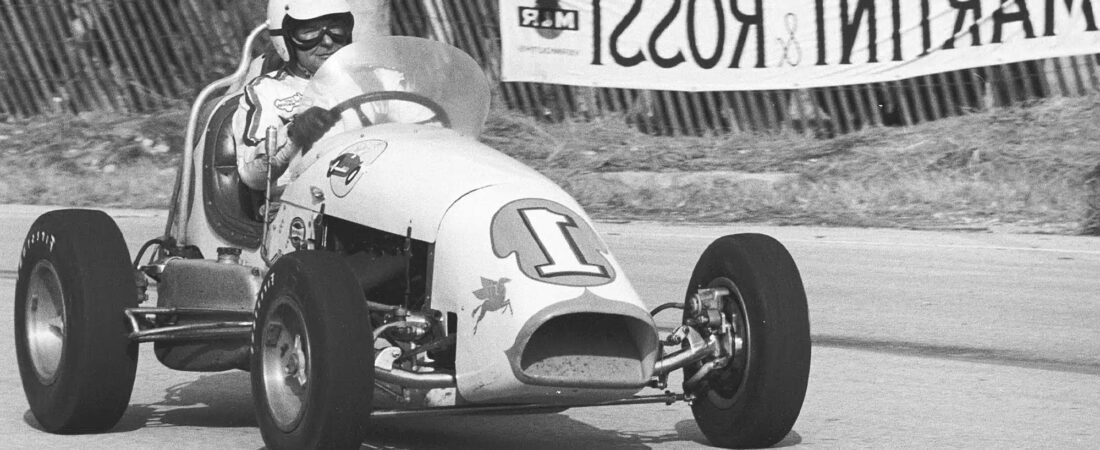
Just six months after winning the 1959 Indianapolis 500, Indy 500 champion Rodger Ward arrived at the United States Grand Prix with a car that looked completely out of place alongside the finest Formula 1 machinery of the era.
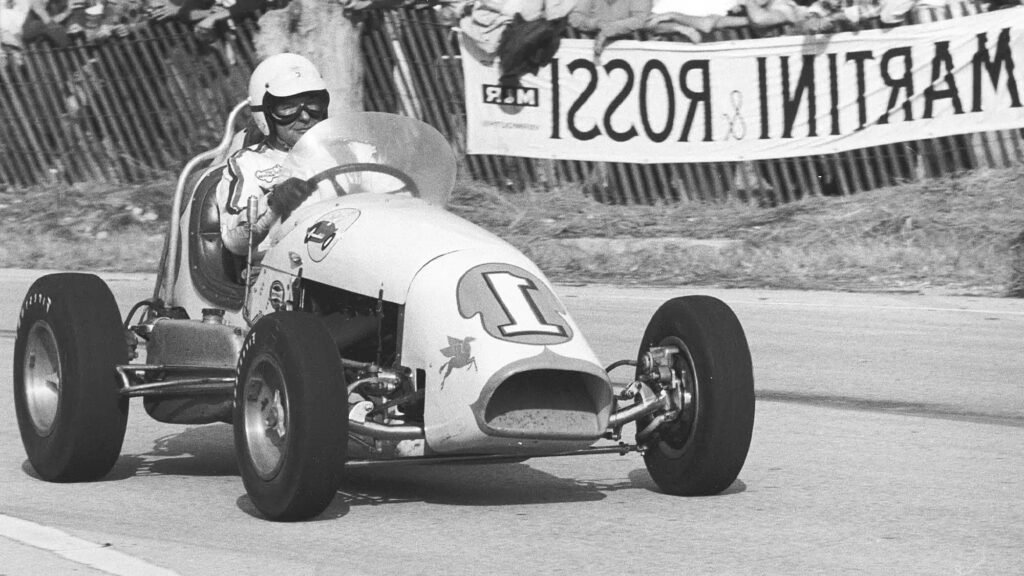
Instead of bringing a conventional Grand Prix car, the American champion entered a tiny Kurtis Kraft midget — a machine built for short oval tracks, powered by a 1.75-liter Offenhauser engine, and never intended to compete against the likes of Cooper, Ferrari, and Lotus on a circuit like Sebring.
Ward was no amateur. He was one of America’s most accomplished racing drivers, fresh from the biggest victory of his career. But when qualifying ended, Stirling Moss had taken pole position in exactly three minutes, while Ward’s best lap was an astonishing 43.8 seconds slower.
What followed was one of the strangest experiments in Formula 1 history — and a fascinating demonstration of just how different American and European racing had become.
The Indy 500 Champion Who Had Nothing Left to Prove
Rodger Ward wasn’t an inexperienced outsider trying his luck against the world’s best Formula 1 drivers. By the time he arrived at Sebring in December 1959, he had already established himself as one of America’s leading open-wheel racers, with years of experience in midget racing and the USAC Championship Car series.
Born in 1921, Ward served during World War II before building his racing career in the United States. He became particularly successful in USAC competition, which included the Indianapolis 500 and represented the highest level of American open-wheel racing at the time. His reputation was built on speed, versatility, and the ability to compete successfully on America’s demanding oval circuits.
The 1959 season marked a defining moment in his career. Ward qualified sixth for the Indianapolis 500 at an average speed of approximately 144 mph before driving his Leader Card Watson-Offenhauser to victory. It was the biggest achievement of his career up to that point, and it also carried an unusual distinction: Indianapolis was still part of the Formula 1 World Championship calendar.
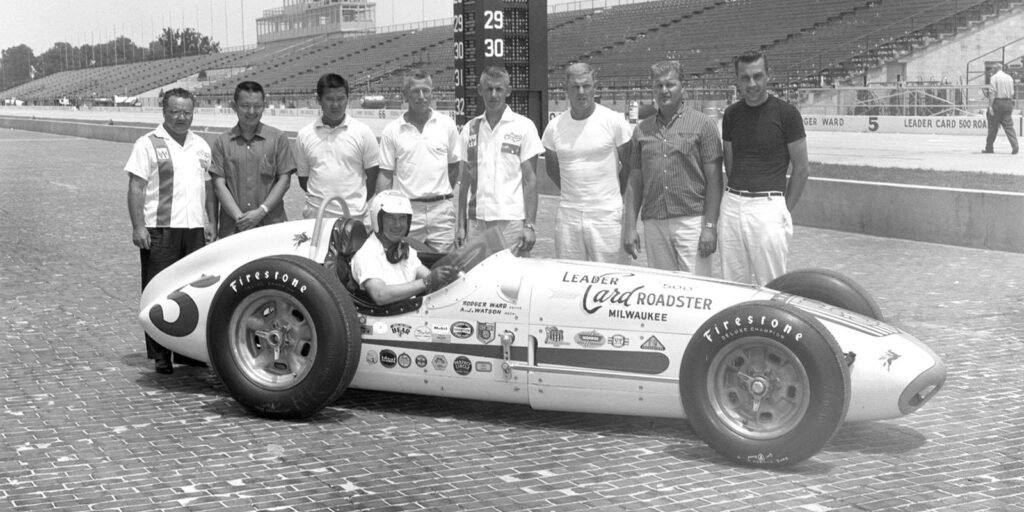
As a result, Ward earned eight World Championship points for his Indianapolis victory, eventually finishing 10th in the official 1959 Formula 1 Drivers’ standings despite not having raced a conventional Grand Prix car. He would go on to win the Indianapolis 500 again in 1962 and claim the USAC National Championship in both 1959 and 1962.
There was no question about Ward’s ability behind the wheel. The extraordinary result awaiting him at Sebring had much more to do with the machine he had chosen than with the man driving it.
How a Victory at Lime Rock Inspired a Crazy Formula 1 Experiment
The idea of entering a midget car in a Formula 1 Grand Prix might sound completely absurd today, but Ward had a reason to believe it could work. Earlier in his career, he had demonstrated that a lightweight American midget could defeat much larger and more sophisticated sports cars under the right conditions.
At Lime Rock Park in Connecticut, Ward raced a midget against sports cars and won convincingly. The little machine’s remarkable acceleration, low weight, and agility had allowed it to overcome cars that appeared far more capable on paper. Ward later recalled that this experience helped convince him to attempt something considerably more ambitious.
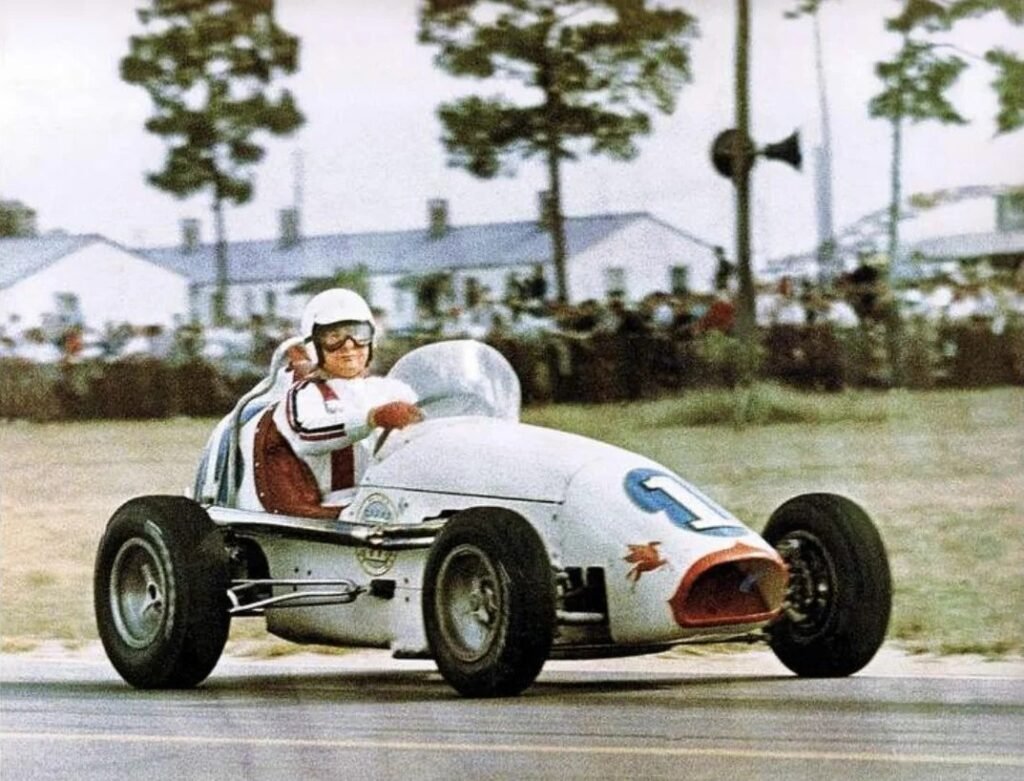
That opportunity arrived with the inaugural United States Grand Prix, scheduled for December 12, 1959, at Sebring International Raceway in Florida. Rather than securing a conventional Formula 1 car, Ward entered a Leader Card-owned Kurtis Kraft midget, a machine developed for an entirely different form of motorsport.
The car featured a four-cylinder Offenhauser engine displacing approximately 1.75 liters, significantly smaller than the 2.5-liter engines permitted under contemporary Formula 1 regulations. It also used a solid front axle, tiny 12-inch Firestone tires, and a chassis configuration rooted in American oval racing rather than European road-course competition.
Perhaps the biggest challenge was the transmission. Ward later explained that a typical midget effectively operated with only one useful racing gear, which was perfectly adequate for the short oval tracks where these cars normally competed. Sebring, however, demanded a much wider range of speeds, from slow corners to long straights.
To make the experiment possible, the team added a clutch and combined a two-speed gearbox with a two-speed differential, providing additional ratios. The Offenhauser also had to operate on gasoline rather than its usual racing fuel to comply with Formula 1 regulations, a change Ward remembered as less than ideal for the engine.
The modifications were inventive, but they couldn’t change the car’s fundamental purpose. The Kurtis Kraft had been designed to excel on short American ovals, and Sebring was about to reveal just how difficult it was to adapt that concept to international Grand Prix racing.
The Qualifying Disaster: 43.8 Seconds Behind Stirling Moss
When qualifying began at Sebring, the difference between Ward’s tiny Kurtis Kraft and the purpose-built Formula 1 cars became impossible to ignore. The American champion was facing machinery developed specifically for high-speed road circuits, driven by some of the most accomplished racers in the world.
Stirling Moss secured pole position in his Cooper-Climax with a lap of 3:00.0, while Jack Brabham qualified second in 3:03.0. Tony Brooks, driving for Ferrari, recorded a 3:05.9 to take fourth place, demonstrating just how competitive the leading cars were around the demanding Florida circuit.
Ward’s fastest lap was 3:43.8, leaving him 43.8 seconds behind Moss and placing him 19th and last among the drivers who started the Grand Prix. His time was approximately 24.4% slower than pole position, an almost unimaginable difference by modern Formula 1 standards. Under today’s 107% qualifying rule, such a performance would fall nowhere near the normal threshold required to start.
The enormous gap wasn’t simply the result of having a smaller engine. Midget racing rewarded explosive acceleration, low weight, and the ability to rotate aggressively through relatively short oval corners. Sebring demanded a very different combination of characteristics, including sustained high-speed stability, effective braking, flexible gearing, and predictable handling through a wide variety of turns.
Ward later remembered reaching approximately 140 mph on the straights, an impressive speed for such a small machine. But the Kurtis Kraft lacked the overall performance needed to compete with cars designed from the beginning for road racing. Every braking zone, corner, and acceleration point exposed another compromise in its unconventional configuration.
The experiment had produced a clear answer before the race had even started. A car capable of defeating sophisticated machinery in one racing environment could become hopelessly uncompetitive when taken outside the conditions for which it had been developed.
A Historic Grand Prix That Ended After Just 20 Laps
Despite the enormous qualifying deficit, Ward took his place on the starting grid for the 1959 United States Grand Prix. His unusual entry was only one part of a race that would become one of the most memorable championship finales in Formula 1’s early history.
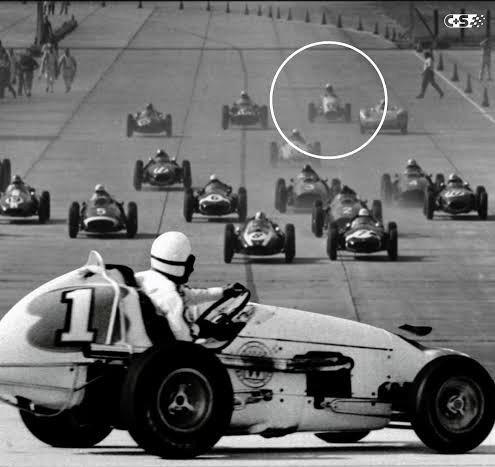
Three drivers arrived at Sebring with a mathematical chance of winning the World Championship: Jack Brabham, Stirling Moss, and Tony Brooks. Moss had the advantage of pole position, but his championship hopes ended early when his Cooper developed transmission trouble, leaving Brabham in a strong position to secure the title.
The Australian appeared set to win both the race and the championship until his Cooper ran out of fuel near the finish. In one of Formula 1’s most famous moments, Brabham pushed his car across the finish line to take fourth place, securing enough points to become World Champion for the first time.
At the front, Bruce McLaren inherited the opportunity and claimed victory, finishing just 0.6 seconds ahead of Maurice Trintignant. At 22 years old, McLaren became the youngest winner of a Formula 1 World Championship Grand Prix at the time, adding another remarkable chapter to an already extraordinary afternoon.
Ward’s race was considerably shorter. After completing 20 laps, his Kurtis Kraft retired with a clutch problem, bringing the unconventional experiment to an end. The American champion had failed to finish, but he had nevertheless accomplished something few drivers would ever attempt: racing a genuine American midget against the world’s leading Formula 1 cars.
Years later, Ward remembered the experience with affection rather than embarrassment. He had enjoyed his time at Sebring and, perhaps more importantly, had met Jack Brabham, beginning a friendship that would connect this strange Grand Prix appearance to another important development in motorsport history.
The Surprising Connection to the Revolution at Indianapolis
One of the most fascinating consequences of Ward’s 1959 Formula 1 adventure had little to do with his own car. During his time at Sebring, he became acquainted with Jack Brabham and was impressed by the European rear-engined racing philosophy that had helped transform Formula 1.
Ward later recalled encouraging the newly crowned World Champion to bring his rear-engined Cooper to the Indianapolis 500. At the time, Indianapolis was still dominated by large, powerful front-engined roadsters, and the idea of competing with a relatively small European-style car seemed unconventional.
Brabham eventually accepted the challenge. In 1961, he entered a modified Cooper-Climax at Indianapolis and finished ninth, a result that attracted attention despite falling short of victory. The Cooper’s performance suggested that the traditional American roadster might not remain the dominant design forever.
Over the following years, rear-engined cars became increasingly competitive at Indianapolis. Their handling characteristics, weight distribution, and development potential eventually helped overturn decades of conventional thinking. By the middle of the 1960s, the front-engined Indy roadster was rapidly becoming obsolete.
The irony was remarkable. In 1959, Ward had brought a traditional American oval-racing machine into Formula 1 and discovered how poorly it adapted to a European-style road-racing environment. Just two years later, Brabham brought European Formula 1 technology to Indianapolis, where that same philosophy would help reshape the future of American open-wheel racing.
Ward’s Kurtis Kraft had failed spectacularly at Sebring, but the friendship and exchange of ideas surrounding that experiment formed a small yet fascinating part of a much larger transformation.
Rodger Ward Returned to Formula 1 — But With a Very Different Car
Although his appearance at Sebring is often remembered as a one-off curiosity, Ward’s Formula 1 story didn’t end in 1959. Four years later, he returned to the World Championship for the 1963 United States Grand Prix at Watkins Glen, this time with machinery far more suited to international Grand Prix racing.
Instead of a modified American midget, Ward drove a Lotus 24 powered by a BRM V8 engine and entered by Reg Parnell Racing. It was a conventional Formula 1 car, designed around the technical requirements of the championship rather than adapted from an entirely different racing discipline.
Ward qualified 17th, a much less extraordinary result than his performance at Sebring, but his second Grand Prix appearance also ended prematurely. Gearbox trouble forced him to retire, leaving him without a finish from his two World Championship starts outside Indianapolis.
Those results did little to diminish his achievements in American racing. Ward retired as a two-time Indianapolis 500 winner and two-time USAC National Champion, and later became a familiar voice to American television audiences through his work as a racing commentator.
Yet his 1959 appearance at Sebring remains one of the most unusual experiments in Formula 1 history. It brought together two very different racing traditions at a time when American and European motorsport were developing along separate technological paths.
Ward had arrived as one of America’s finest drivers, convinced that a tiny oval racer might surprise the world’s best Grand Prix machinery. Instead, he discovered a performance gap so enormous that it remains astonishing more than six decades later.
A reigning Indianapolis 500 champion, a tiny Kurtis Kraft midget, and 43.8 seconds separating him from pole position. Few Formula 1 experiments have ever illustrated the difference between racing worlds quite so dramatically.
Enjoyed this story? Discover more remarkable moments and forgotten stories from motorsport history in our Paddock Tales section.